


7 Things Everyone Forgets to Clean Before It Is Too Late
Accepting Life's Concealed Chaos
I've come to realize that some of the messes in life are loud and proud. You know the ones I'm talking about those pesky crumbs that seem to multiply on the counter, the toothpaste that splatters in the sink after a rushed morning routine, and those muddy footprints that tell the story of a busy household. They’re the obvious signs of life happening all around us, and they can be annoying, but at least they’re easy to spot.
But let me tell you, the real troublemakers are the sneaky ones. They lurk behind appliances, nestled inside filters, and hide under seals, waiting for the perfect moment to make their presence known. I can’t tell you how many times I've been blindsided by a sudden smell wafting from the kitchen or the alarming sound of something leaking just when I thought everything was running smoothly. It’s like a game of hide-and-seek, and I’m often the last one to find out where the mess is hiding.
These hidden messes remind me of the complexities of life itself. Just when you think you’ve got everything under control, something unexpected crops up. I’ve learned to embrace these moments, to laugh at the chaos, and to remind myself that it’s all part of the journey. After all, isn’t that what life is about? Navigating the mess, finding joy in the imperfections, and learning to appreciate the beauty in the chaos.
A good cleaning routine is not just about making a home look better. It helps appliances last longer, cuts down on odors, and prevents small problems from turning into expensive repairs. These are the seven overlooked spots worth putting on your calendar before they make the decision for you.
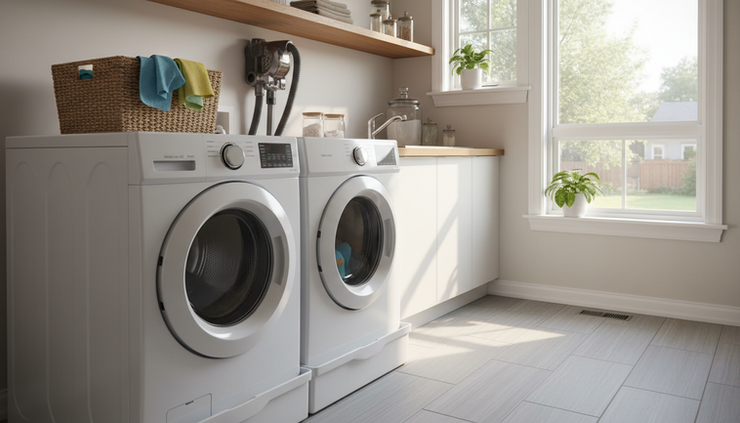
Hidden appliance areas need more attention than they get
Appliances do a lot of work in the background. Because they run often and sit in fixed spots, dust, grease, lint, and food debris can build up without anyone noticing.
1. Dryer vents
The lint screen is only part of the job. Lint also collects inside the dryer duct and exterior vent. When that buildup gets thick, the dryer works harder, clothes take longer to dry, and heat has fewer places to escape It’s also a fire safety hazard.
Always reminder to clean that lint screen after every load. It really helps keep things running smoothly and efficiently. Lint build up causes your dryer to work harder, which will ruin the life span. Every once in a while, it’s also a good idea to pull the dryer away from the wall and give the area a quick vacuum. Don’t forget to check the duct for any lint buildup or kinks, too! Oh, and make sure that vent flap outside is opening up without any issues.
Watch for these signs:
Clothes feel hot but still damp
The laundry room feels unusually warm
The dryer has a burning smell
Drying time keeps getting longer
If the duct is long, hard to reach, or packed with lint, call a professional. This is one area where waiting can become a real safety issue.
2. Refrigerator coils
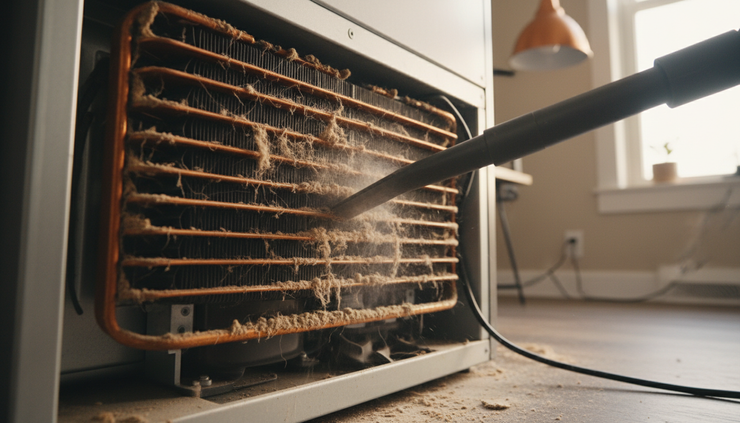
Refrigerator coils help release heat. When they are covered in dust and pet hair, the fridge has to work harder to stay cold. That can raise energy use and shorten the life of the appliance. Energy bills are high enough an easy wipe down of the coils can actually save you some cash.
The coils are usually behind the fridge or underneath it behind a grille. Unplug the refrigerator before cleaning. Use a coil brush or vacuum attachment to remove dust gently. While you are there, clean the floor under the fridge too.
This task does not take long, but it is easy to forget because the mess is completely hidden.
Wet areas can turn messy fast
Moisture changes everything. A little residue in a dry corner may be harmless for a while. Add water, soap, food, or humidity, and buildup can become odor, mold, or a clog.
3. Bathroom exhaust fans
Bathroom fans pull moist air out of the room. When the cover and fan blades clog with dust, the fan cannot move air well. That leaves steam sitting on walls, mirrors, ceilings, and grout. The bathroom fan is easily overlooked. I sometimes look up and realized I haven’t cleaned my own in sometime.
Turn the fan off at the switch. Remove the cover and wash it in warm, soapy water. Use a vacuum or microfiber cloth to clean dust from the fan housing. Let everything dry before replacing the cover. It literally takes less than five minutes.
A good clue is the mirror. If it stays foggy long after a shower, the fan may need cleaning or repair. Cleaning it may be enough to improve airflow.
4. Washing machine seals and filters
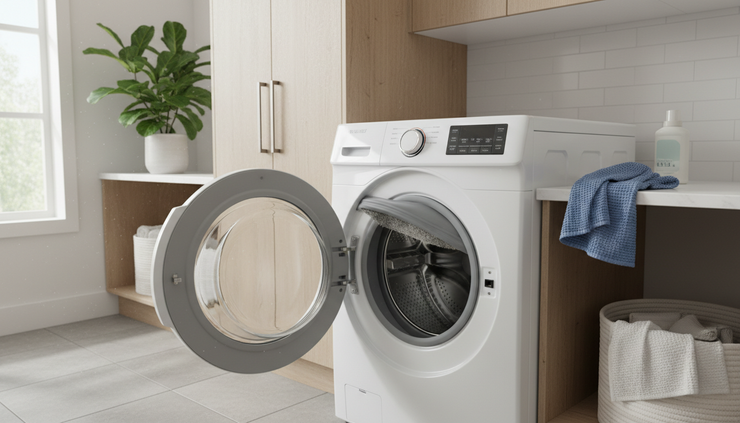
Front-load washers are especially prone to grime in the rubber door gasket. Hair, lint, detergent residue, and moisture can sit in the folds. Over time, that can create a sour smell that transfers to clean laundry.
Wipe the gasket weekly with a damp cloth. Pull back the folds and check for small items, lint, and residue. Leave the door open after loads so the drum can dry.
Some washers also have a drain pump filter. Check the owner’s manual before opening it, because water may come out. Place a towel and shallow pan underneath first.
Minor habit, major benefit: use the right amount of detergent. Too much soap leaves residue, leading to odors and buildup. More soap doesn’t mean more clean.
Kitchen grease and food debris hide in plain sight
The kitchen may get wiped down daily, but several hard-working parts rarely make the list. They collect grease, crumbs, minerals, and food particles until smells or performance problems show up.
5. Range hood filters
If you cook often, your range hood filter is catching grease even when it still looks fine from the outside. A clogged filter cannot pull steam and cooking odors as well. Grease buildup can also become sticky and difficult to remove. This is a common issue I’ve noticed in my clients homes and even my own. I had grease coming down my backsplash and couldn’t figure out why. I finally checked the range hood filter and realized I had never replaced it in 5 years. Ugh…made a huge difference.
You could also clean them. Most metal filters slide or pop out. Soak them in hot water with dish soap. For heavy grease, add baking soda and let the filter sit before scrubbing with a soft brush. Rinse well and let it dry completely before reinstalling.
Check the underside of the hood too. Grease often collects around the light cover and edges.
6. Dishwasher filters and spray arms
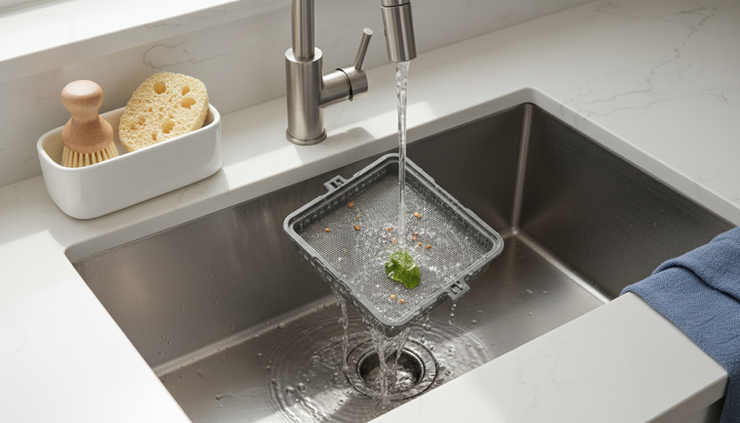
A dishwasher cleans dishes, but it does not clean itself completely. Food bits can collect in the filter, and mineral deposits can clog the spray arm holes. When that happens, dishes come out gritty, cloudy, or still dirty.
Remove the bottom rack and look for the filter at the base. Twist it out if your model allows it, then rinse away food debris. Use a soft brush for stubborn residue. Check the spray arms and clear clogged holes with a toothpick or small brush.
Run an empty hot cycle with a dishwasher cleaner or a cup of white vinegar placed upright on the top rack, if your manufacturer allows it. Avoid mixing cleaners, especially anything containing bleach.
Outdoor drainage is easy to ignore until water backs up
Some cleaning jobs matter most during bad weather. You may not think about them on a clear day, but they can protect siding, foundations, basements, patios, and landscaping when rain arrives.
7. Gutters and downspouts
Leaves, pine needles, seed pods, and roof grit collect in gutters. If water cannot flow through, it spills over the sides. That can soak fascia boards, pool near the foundation, or create icy patches in cold weather.
Clean gutters at least once or twice a year, and more often if trees hang over the roof. Scoop debris into a bucket, rinse the gutter with a hose, and check that downspouts drain away from the house.
If water trickles slowly or backs up, the downspout may be clogged. A hose, plumber’s snake, or detachable section may solve it. If the roofline is high or the ground is uneven, hire help. Ladder work is not worth a fall.
Make forgotten cleaning harder to forget
The best fix is not a marathon cleaning day. It is a simple reminder system.
Add these tasks to a seasonal checklist:
Dryer vent
Refrigerator coils
Bathroom fan
Washer gasket and filter
Range hood filter
Dishwasher filter
Gutters and downspouts
Pair each job with something already on your calendar. Clean refrigerator coils when you change air filters. Check gutters when you put away patio furniture. Wipe the washer gasket on laundry day.
Your home likes to drop little hints before problems pop up. If your clothes take forever to dry, it might be a sign your dryer’s slacking off. Bad smells? Could be something that needs fixing. Fogged-up mirrors might mean your ventilation’s not doing its job. A pile-up of dirty dishes could mean your dishwasher's acting up. Gutters overflowing? Time for some maintenance. These aren't just annoying things; they're your home's way of giving you a heads-up about possible issues.
Catch these seven spots early, and cleaning becomes less about damage control and more about keeping the house running the way it should.



Comments